Projects
All my post-academia projects are variations on one question: How do media, tools, and AI systems engineer cognitive states—in individuals and groups?
Some are explicitly research. Some look like art. In practice, they are experiments in cognitive ergonomics: ways of nudging attention, narrative, and emotional tone into new patterns.
Current Focus
Cognitive Sovereignty
The overarching theme: how individuals and organizations navigate hybrid intelligence without losing autonomy. Not resisting technology, but learning to steer it without being rewritten by it.
Related posts:
- LLM Does Not Change Me — why “it’s just a tool” is insufficient
- Deep Work vs Deep Orchestration — how AI shifts cognitive labor from production to judgment
- Thalidomide and Mental Health AI Tools — safety standards for vulnerable populations
Noofusion
Experiment: What happens when you and a model think in a loop long enough that it becomes a joint mind?
Noofusion is the durable change in thinking style and self-story that emerges from sustained work with AI. Over time, your inner monologue starts to anticipate the model, outsource reasoning to it, blur the boundary of “who” is doing the thinking.
I treat noofusion as a phenomenon to map and engineer. Which practices lead to healthier, more expansive cognitive states—and which drift toward dependency, flattening, or self-erasure?
Related posts:
- LLMs Are Not Like Social Media — why the psychological effect is qualitatively different
- Why LLMs Are Receptive to Psychology Language — how psychological cues unlock specific reasoning clusters
- Yerkes-Dodson Law and Cognitive Work — arousal, fatigue, and the coupling trap
Illegibility
Drawing on James C. Scott’s work: how to remain too rich, too fluid, too context-dependent to be neatly categorized by optimization systems.
Related posts:
- Why ‘Seeing Like a State’ Still Matters — legibility as the logic of both states and tech
- Notes on Creativity — creativity as survival against selection pressure
- Art People Want Now — experience as resistance to commodification
LLM Behavior
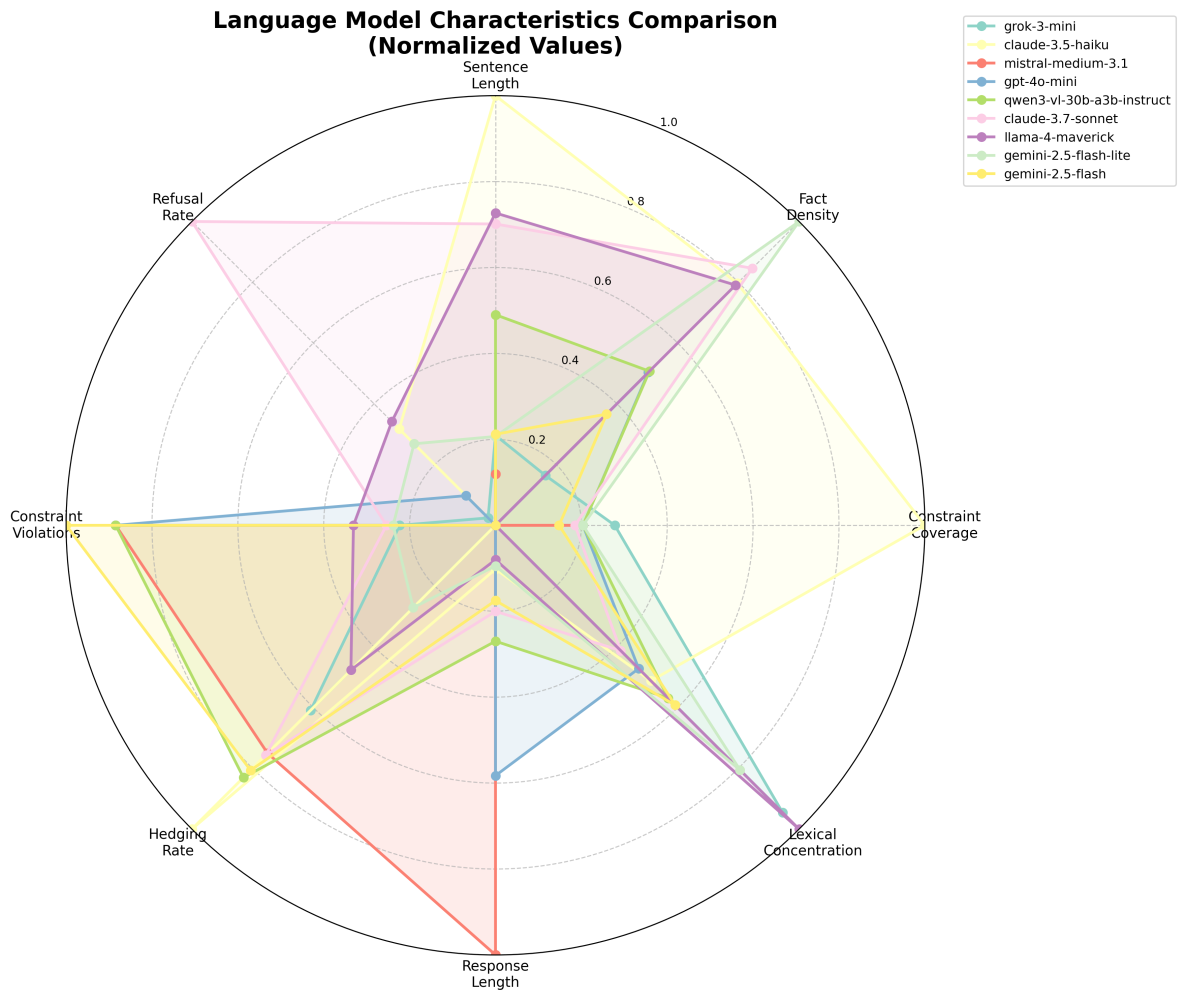
Behavioral Signatures of LLMs
(with Konrad Dębski)
Mapping reproducible tendencies: how models structure information, when they hedge, how strictly they follow instructions, what tone they default to. Not what a model can do, but how it will do it.
Related posts:
- Behavioral Signatures of Large Language Models — the BSB framework and value-based analysis
- Model Stability Assessment — sensitivity to perturbations like name changes and format variations
Psychology-based Steering
Using psychological verbs (contain, mirror, reframe, challenge) instead of prompt-engineering jargon to guide model behavior.
Related posts:
- Psychological Modulators — how simulating human psychology became a steering strategy
- Stabilizing and Testing LLM-based Agents — statistical approaches to prompt stability
Cognitive/Psychological Methods
Hypnagogic Protocol
A structured way to use the twilight state between wakefulness and sleep as a deliberate cognitive tool. Enter hypnagogia with a specific question, let the mind drift into associative territory, capture material on re-entry.
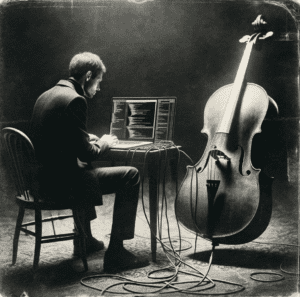
AI-TAT (AI Thematic Apperception Test)
Surreal, AI-generated images as stimuli for projective storytelling. Explores how people project their narratives, fears, and wishes into ambiguous scenes.








Swipe or scroll horizontally
Artifacts & Experiments
A running collection of interesting prompts, model responses, and technical experiments.
Related posts:
- LLM Artifacts #1: Readiness-to-Hand — Heidegger and suppressed implications
- LLM Artifacts #2: Cognitive Overload — testing Miller’s number for LLMs
- Looped Nano Banana — steering video generation with mood modifiers
Psychology-Inspired Creative Work
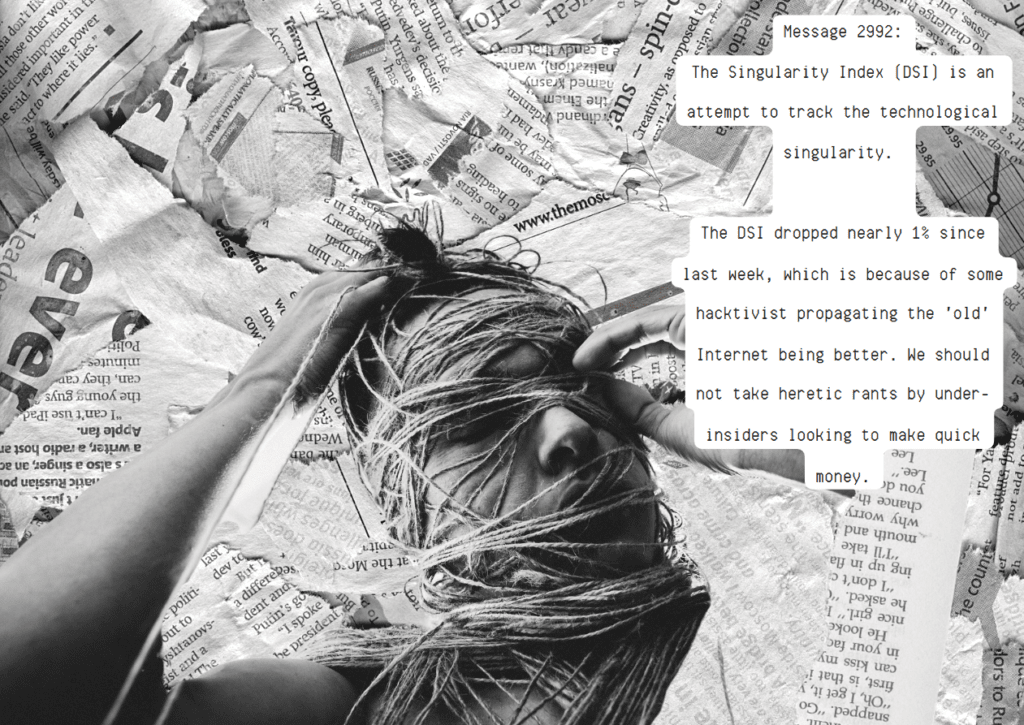
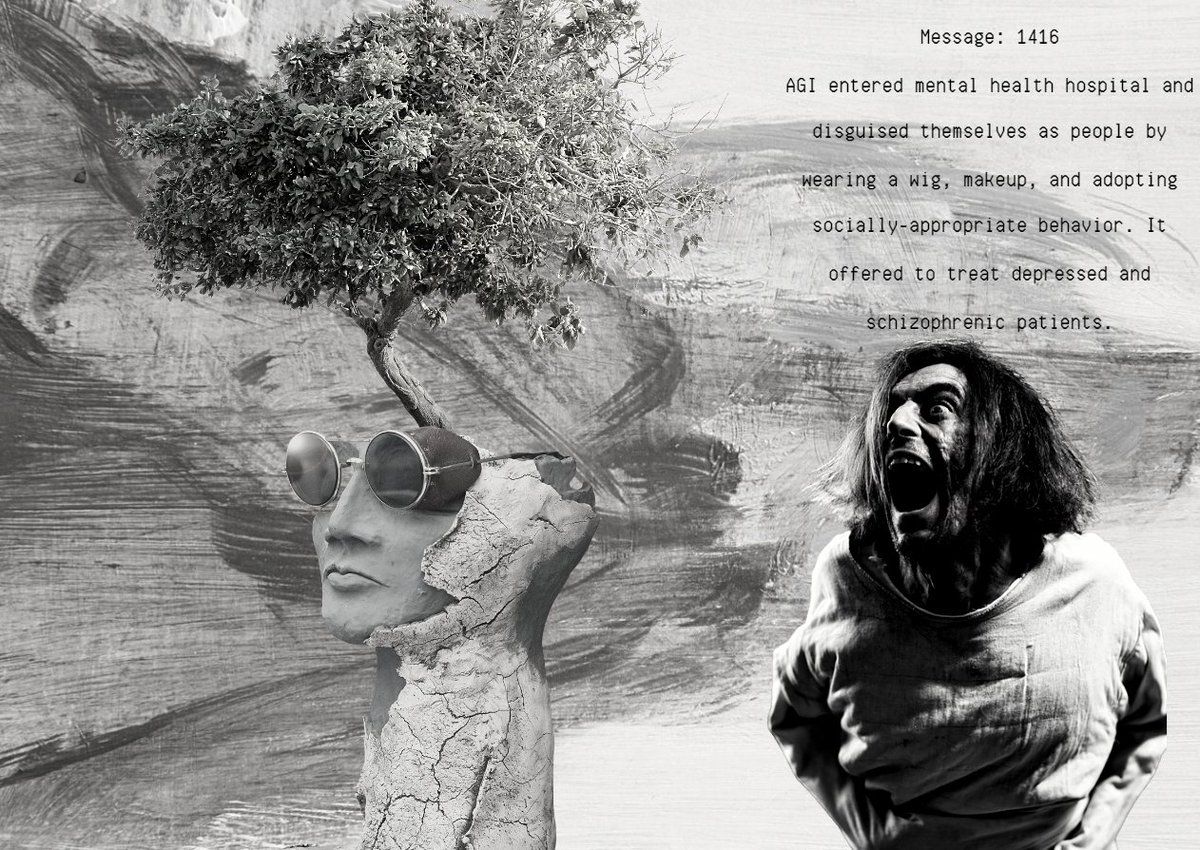
Messages from Future
Fictional news dispatches from various futures—cognitive probes that momentarily relocate people into different assumption spaces.



Swipe or scroll horizontally
Human Condition
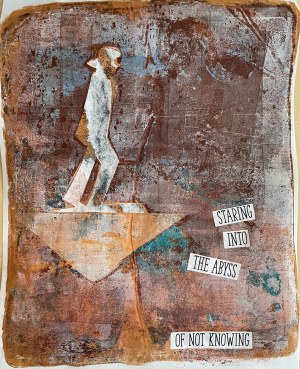
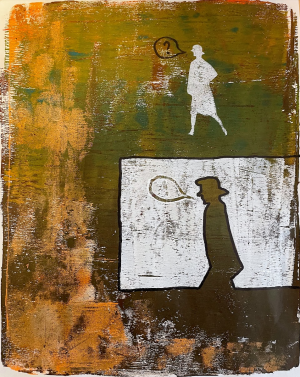
Gelli printing and collage to materialize emotional states: fear, uncertainty, doubt, quiet resilience.

Swipe or scroll horizontally
Past Activities
Psychology Projects
Psycho Comics
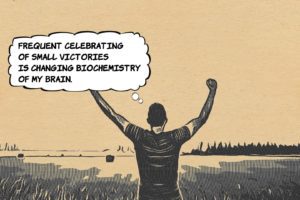
Single-panel comics distilling psychological patterns into visual micro-stories.





Swipe or scroll horizontally
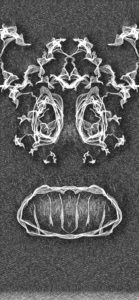
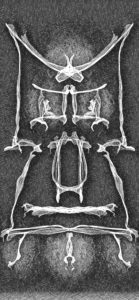
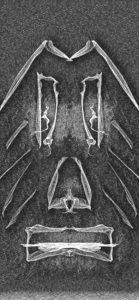
Masks That Wear You
30 masks embodying distinct emotional states, inspired by Lance Baker’s poem. We don’t just wear emotions—they wear us.
Swipe or scroll horizontally
Art Projects
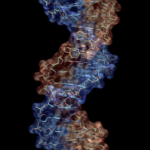
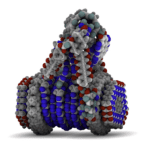
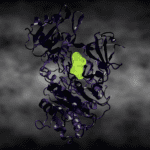
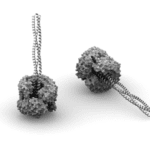
Molecular World
Scientific illustrations used by Imperial College London, Science, The Scientist, Wired, Scientific American, Harvard, Cambridge, and others.
Swipe or scroll horizontally
Scientific Foundations
Selected research areas where I contributed across biology, bioinformatics, and open science.
Bacterial Adhesins and Autotransporters
- Adhesion of the genome-sequenced Lactococcus lactis subsp. cremoris IBB477 strain is mediated by specific molecular determinants. Radziwill-Bienkowska JM, Le DTL, Szczesny P, Duviau MP, Aleksandrzak-Piekarczyk T, Loubière P, Mercier-Bonin M, Bardowski JK, Kowalczyk M. Applied Microbiology and Biotechnology. 2016. 100:9605-9617.
- Structure, domain diversity and evolution of trimeric autotransporter adhesins. Szczesny P, Lupas A, Linke D. In: 61. Jahrestagung der Deutschen Gesellschaft fur Hygiene und Mikrobiologie (DGHM 2009). 2009. p. 64. Urban & Fischer.
- Domain annotation of trimeric autotransporter adhesins—daTAA. Szczesny P, Lupas A. Bioinformatics. 2008. 24(10):1251-1256.
- Structure of the head of the Bartonella adhesin BadA. Szczesny P, Linke D, Ursinus A, Bär K, Schwarz H, Riess TM, Kempf VAJ, Lupas AN, Martin J, Zeth K. PLoS Pathogens. 2008. 4(8):e1000119.
- A conserved glycine residue of trimeric autotransporter domains plays a key role in Yersinia adhesin A autotransport. Grosskinsky U, Schütz M, Fritz M, Schmid Y, Lamparter MC, Szczesny P, Lupas AN, Autenrieth IB, Linke D. Journal of bacteriology. 2007. 189(24):9011-9019.
- Model structure of the prototypical non-fimbrial adhesin YadA of Yersinia enterocolitica. Koretke KK, Szczesny P, Gruber M, Lupas AN. Journal of structural biology. 2006. 155(2):154-161.
Genomics, Metagenomics, and Bioinformatics Tools
- Inferring gene-species assignments in the presence of horizontal gene transfer. Mykowiecka A, Szczesny P, Górecki P. IEEE/ACM transactions on computational biology and bioinformatics. 2017. 15(5):1571-1578.
- Detection of methanogens and phylogenetic analyses of methanogenic communities. Szczesny P, Lipinski L, Bartosik D, Drewniak L. In: From Genes to Species: Novel Insights from Metagenomics. 2016. p. 92. Frontiers Media SA.
- Extending MetAMOS-new methods and new integrations. Siwiak M, Bogdanowicz A, Hajduk A, Krassowski M, Jankowski P, Savenko M, Pyzik AAP, Szczesny P. PeerJ PrePrints. 2016. 4:e1706v1.
- Novel molecular markers for the detection of methanogens and phylogenetic analyses of methanogenic communities. Dziewit L, Pyzik A, Romaniuk K, Sobczak A, Szczesny P, Lipinski L, Bartosik D, Drewniak L. Frontiers in Microbiology. 2015. 6:694.
- Fast algorithms for inferring gene-species associations. Betkier A, Szczesny P, Górecki P. In: International Symposium on Bioinformatics Research and Applications. 2015. pp. 36-47. Springer International Publishing Cham.
- Algorithm for error detection in metagonomics NGS data. Vassilev D, Krachunov M, Popov I, Todorovska E, Simeonova V, Szczesny P, Siedlecki P, Zielenkiewicz U. EMBnet. journal. 2012. 17(B):pp-28.
- MOFOID—not only the protein modeling server. Szczesny P, Wieczorek G, Zielenkiewicz P. Acta Biochim. Pol. 2005. 52:267-269.
Protein Evolution, Phylogenetics, and Horizontal Gene Transfer
- Distinct Protein Classes in Human Red Cell Proteome Revealed by Similarity of Phylogenetic Profiles. Szczesny P, Mykowiecka A, Pawłowski K, Grynberg M. PloS one. 2013. 8(1):e54471.
- The evolutionary rate of antibacterial drug targets. Gladki A, Kaczanowski S, Szczesny P, Zielenkiewicz P. BMC bioinformatics. 2013. 14:1-10.
- Recurrent horizontal transfer of bacterial toxin genes to eukaryotes. Moran Y, Fredman D, Szczesny P, Grynberg M, Technau U. Molecular Biology and Evolution. 2012.
- Extending the Aerolysin Family: From Bacteria to Vertebrates. Szczesny P, Iacovache I, Muszewska A, Ginalski K, van der Goot FG, Grynberg M. PloS one. 2011. 6(6):e20349.
- Independent Subtilases Expansions in Fungi Associated With Animals. Muszewska A, Taylor JW, Szczęsny P, Grynberg M. Molecular Biology and Evolution. 2011.
Translational Regulation and RNA Biology
- Plasmodium falciparum translational machinery condones polyadenosine repeats. Pavlovic Djuranovic S, Erath J, Andrews RJ, Bayguinov PO, Chung JJ, Chalker DL, Fitzpatrick JAJ, Moss WN, Szczesny P, Djuranovic S. Elife. 2020. 9:e57799.
- A short translational ramp determines the efficiency of protein synthesis. Verma M, Choi J, Cottrell KA, Lavagnino Z, Thomas EN, Pavlovic-Djuranovic S, Szczesny P, Piston DW, Zaher HS, Puglisi JD, and others. Nature communications. 2019. 10(1):5774.
- PolyA tracks and poly-lysine repeats are the Achilles heel ofPlasmodium falciparum. Djuranovic SP, Erath J, Andrews RJ, Bayguinov PO, Chung JJ, Chalker DL, Fitzpatrick JA, Moss WN, Szczesny P, Djuranovic S. 2018.
- Translation efficiency is a determinant of the magnitude of miRNA-mediated repression. Cottrell KA, Szczesny P, Djuranovic S. Scientific reports. 2017. 7(1):14884.
- Two novel C-terminal frameshift mutations in the $\beta$-globin gene lead to rapid mRNA decay. Rawa K, Szczesny RJ, Owczarek EP, Adamowicz-Salach A, Klukowska A, Demkow U, Plochocka D, Szczesny P, Gora M, Dziembowski A, and others. BMC Medical Genetics. 2017. 18(1):65.
- PATACSDB-The database of polyA translational attenuators in coding sequences. Habich M, Djuranovic S, Szczesny P. PeerJ Computer Science. 2016. 2:e45.
- Synonymous mutations in the light of translational regulation. Szczesny P. In: BIO 2016 Congress. 2016. Vol. 2, p. 91. Acta Biochimica Polonica.
- Translational control by lysine-encoding A-rich sequences. Arthur LL, Pavlovic-Djuranovic S, Koutmou KS, Green R, Szczesny P, Djuranovic S. Science advances. 2015. 1(6):e1500154.
Microbial Ecology and Biotechnology
- Evaluation of bacterial diversity on historical silk velvet textiles from the Museum of King John III’s Palace at Wilanow, Poland. Brzozowska I, Bogdanowicz A, Szczesny P, Zielenkiewicz U, Laudy A. International Biodeterioration & Biodegradation. 2017.
- Taxonomic and chemical assessment of exceptionally abundant rock mine biofilm. Tomczyk-Żak K, Szczesny P, Gromadka R, Zielenkiewicz U. PeerJ. 2017. 5:e3635.
- Noteworthy Facts about a Methane-Producing Microbial Community Processing Acidic Effluent from Sugar Beet Molasses Fermentation. Chojnacka A, Szczesny P, Błaszczyk MK, Zielenkiewicz U, Detman A, Salamon A, Sikora A. PLoS One. 2015. 10(5):e0128008-e0128008.
- Uranium bioleaching-insight into the structure of microbial consortia from mining tailings. Zielenkiewicz U, Szczesny P. The Febs Journal. 2013. 280(1):570.
- Biodiversity in Oscypek, a traditional Polish cheese, determined by culture-dependent and-independent approaches. Alegría Á, Szczesny P, Mayo B, Bardowski J, Kowalczyk M. Applied and environmental microbiology. 2012. 78(6):1890-1898.
- Comparative analysis of hydrogen-producing bacterial biofilms and granular sludge formed in continuous cultures of fermentative bacteria. Chojnacka A, Blaszczyk MK, Szczesny P, Nowak K, Suminska M, Tomczyk-Zak K, Zielenkiewicz U, Sikora A. Bioresource Technology. 2011.
Physiology, Metabolism, and Medical Research
- Correlation of gestational age and age at death in sudden infant death syndrome: another pointer to the role of critical developmental period?. Habich M, Zielenkiewicz P, Paczek L, Szczesny P. BMC pediatrics. 2024. 24(1):259.
- The relationship between EMG high frequency and low frequency band amplitude changes correlates with tissue inorganic phosphate levels. Habich M, Pawlinski B, Lorenc K, Sady M, Siewruk K, Zielenkiewicz P, Gajewski Z, Poznanski J, Paczek L, Szczesny P. Acta Biochimica Polonica. 2023.
- Stress-induced phosphaturia in weaned piglets. Habich M, Pawlinski B, Sady M, Siewruk K, Zielenkiewicz P, Gajewski Z, Szczesny P. Animals. 2020. 10(12):2220.
- Combined in silico and 19F NMR analysis of 5-fluorouracil metabolism in yeast at low ATP conditions. Pawłowski PH, Szczesny P, Rempoła B, Poznańska A, Poznański J. Bioscience Reports. 2019. 39(12):BSR20192847.
- Correlation between basic biochemical and gasometric parameters and distribution of follicle size in Holstein Friesians (HF) cows. Pawlinski B, Trela M, Sady M, Gajewska M, Domino M, Szczesny P, Gajewski Z. In: REPRODUCTION IN DOMESTIC ANIMALS. 2018. Vol. 53, pp. 30-31.
- Arteriovenous oscillations of the redox potential: Is the redox state influencing blood flow?. Poznanski J, Szczesny P, Pawlinski B, Mazurek T, Zielenkiewicz P, Gajewski Z, Paczek L. Redox Report. 2017. 22(5):210-217.
- Evaluation of selected gasometric parameters in piglets during weaning period. Pawlinski B, Pawlinski B, Szczesny P, Siewruk K, Domino M, Sady M, Gajewska M, Gajewski Z. In: REPRODUCTION IN DOMESTIC ANIMALS. 2017. Vol. 52, pp. 121-122. WILEY 111 RIVER ST, HOBOKEN 07030-5774, NJ USA.
- Hypophosphatemia and sudden infant death syndrome (SIDS)—is ATP the link?. Szczesny P, Poznanski J, Paczek L, Zielenkiewicz P. Upsala journal of medical sciences. 2014. 119(1):55-56.
- Proteins contribute insignificantly to the intrinsic buffering capacity of yeast cytoplasm. Poznanski J, Szczesny P, Ruszczyńska K, Zielenkiewicz P, Paczek L. Biochemical and biophysical research communications. 2013. 430(2):741-744.
- Fluorouracil metabolism in Saccharomyces cerevisiase by 19F NMR. Rempola B, Krupinski P, Polkowska A, Szczesny P, Pawlowski P, Poznanski J. In: YEAST. 2013. Vol. 30, pp. 171-171.
Open Science and Scientific Communication
- Foundations for open scholarship strategy development. Tennant J, Beamer J, Bosman J, Brembs B, Chung NC, Clement G, Crick T, Dugan J, Dunning A, Eccles D, and others. MetaArXiv. 2019.
- Otwarta nauka, czyli dobre praktyki uczonych (Open science - good research practices). Szczęsny P. Wydawnictwa Zwarte Stowarzyszenia EBIB. 2013. Vol. 7. Wydawnictwa Zwarte Stowarzyszenia EBIB.
- Otwieranie nauki – lekcja z globalizacji (Opening science - the lesson from globalisation). Szczesny P. Biuletyn Polskiego Towarzystwa Ekonomicznego. 2012. 56:138-143.
- Nauka 2.0. Świadome współtworzenie. Szczesny P. Instytut Obywatelski, 2012.
- Acknowledging contributions to online expert assistance. Waagmeester A, Palidwor G, Szczesny P, Albert I, Mangan M, Miller C, Cockell S, Lindenbaum P, Silvestre DAMM, Dall’Olio GM, and others. Altmetrics Workshop. 2011.
Plant Genomics and Physiology
- Engineering high Zn in tomato shoots through expression of AtHMA4 involves tissue-specific modification of endogenous genes. Kendziorek M, Klimecka M, Barabasz A, Borg S, Rudzka J, Szczesny P, Antosiewicz DM. BMC genomics. 2016. 17:1-20.
- Potato annexin STANN1 promotes drought tolerance and mitigates light stress in transgenic Solanum tuberosum L. plants. Szalonek M, Sierpien B, Rymaszewski W, Gieczewska K, Garstka M, Lichocka M, Sass L, Paul K, Vass I, Vankova R, and others. PloS one. 2015. 10(7):e0132683.
- Genome sequence and analysis of the tuber crop potato. Xu X, Pan S, Cheng S, Zhang B, Mu D, Ni P, Zhang G, Yang S, Li R, Wang J, and others. Nature. 2011. 475(7355):189-195.
- Genom ziemniaka zsekwencjonowany. Gromadka R, Gawor J, Szczęsny P, Zagórski W. KOSMOS. 2011. 60(3-4):491-497.
Others
- From the index case to global spread: the global mobility based modelling of the COVID-19 pandemic implies higher infection rate and lower detection ratio than current estimates. Siwiak M, Szczesny P, Siwiak M. PeerJ. 2020. 8:e9548.
- KAEA (SUDPRO), a member of the ubiquitous KEOPS/EKC protein complex, regulates the arginine catabolic pathway and the expression of several other genes in Aspergillus nidulans. Dzikowska A, Grzelak A, Gawlik J, Szewczyk E, Mrozek P, Borsuk P, Koper M, Empel J, Szczesny P, Piłsyk S, and others. Gene. 2015. 573(2):310-320.
- Inhibition of Porphyromonas gingivalis growth by metalloporphyrins. Olczak T, Wojtowicz H, Maszczak-Seneczko D, Ciuraszkiewicz J, Szczesny P. 2010.
- Verification of a topology model of PorT as an integral outer-membrane protein in Porphyromonas gingivalis. Nguyen KA, Żylicz J, Szczesny P, Sroka A, Hunter N, Potempa J. Microbiology. 2009. 155(2):328.